15 Signs Your Hearing Conservation Program Needs an Audit
July 16, 2026 · 6 min read
By Jeff Schroeder, Foster Special Instruments
Under 29 CFR 1910.95, any employer with noise exposure at or above an 8-hour time-weighted average of 85 dBA must run a hearing conservation program: baseline audiograms, annual testing, hearing protection, training, and recordkeeping. A program that exists on paper is not the same as one that holds up to an audit. These fifteen signs point to a real compliance gap, not a cosmetic one.
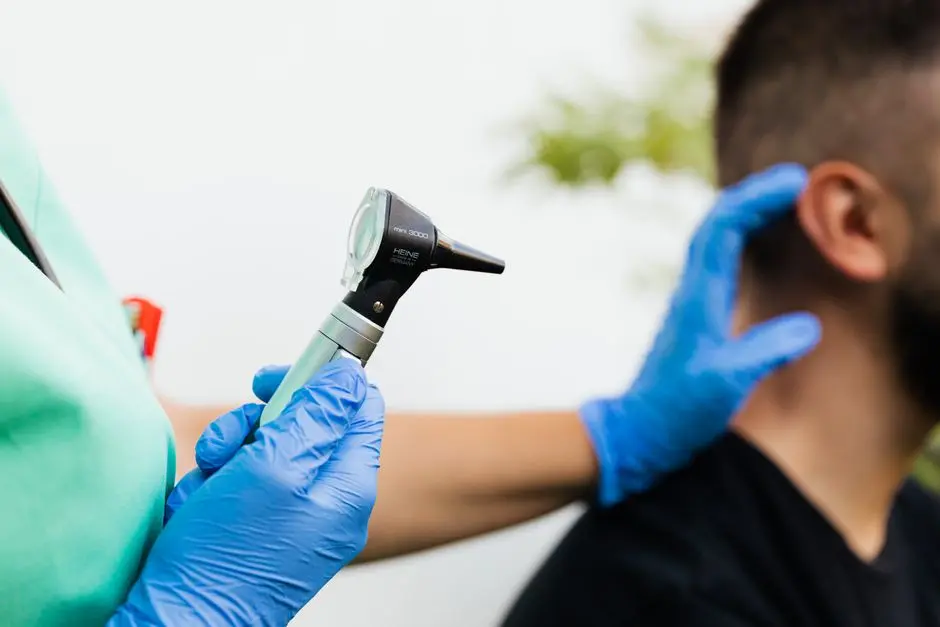
What are the warning signs of a hearing conservation program gap?
1. No baseline audiogram within 6 months of exposure
1910.95 requires a baseline audiogram within 6 months of an employee's first exposure at or above the 85 dBA action level (within 1 year if testing is done with a mobile van, with hearing protectors required in the interim). Without a documented baseline, every later test has nothing valid to compare against, which means a real hearing loss can go undetected.
2. Annual audiograms aren't actually compared to baseline
Running the annual test is only half the requirement. Each result has to be compared against the employee's baseline to check for a Standard Threshold Shift (STS): an average shift of 10 dB or more at 2000, 3000, and 4000 Hz in either ear. A program that files the annual audiogram without this comparison is not meeting the standard, even though testing is happening.
3. STS cases aren't recorded or followed up
Per 29 CFR 1904.10, a work-related STS is an OSHA recordable illness once a physician or audiologist determines the shift is work-related and 10 dB or more worse than the baseline (after age correction). If your log shows annual tests but no recordable STS entries over several years across a sizable noise-exposed population, that is a red flag for either exceptional luck or a review process that is not catching real shifts.
4. No age correction applied to shift calculations
1910.95 Appendix F allows age-related hearing loss to be subtracted from the measured shift before deciding whether an STS occurred. Programs that skip this step either over-report STS (wasting resources on false positives) or, more commonly, never apply it at all and miss that someone needs retraining on hearing protector use.
5. Audiometric technicians aren't properly qualified
Testing must be performed by a certified audiologist, otolaryngologist, physician, or a technician who is certified by CAOHC or has demonstrated competence, and who is responsible to an audiologist, otolaryngologist, or physician. If testing is run by whoever is available that day with no certification on file, the results are vulnerable to being thrown out in a contested claim.
6. No audiometer calibration records
The audiometer itself needs a functional check before each day of testing and an exhaustive calibration annually against a reference standard. Missing calibration certificates mean every test performed on that device during the gap period is defensible only by luck.
7. Hearing protectors aren't evaluated for attenuation
It is not enough to hand out earplugs. The standard requires attenuation evaluation whenever noise exposures increase enough that protectors may no longer provide adequate protection, and whenever an employee has an STS. A program that issues one style of hearing protection to everyone without checking fit or attenuation is skipping a required step.
8. Annual training isn't actually happening every year
1910.95(k) requires annual training covering the effects of noise, the purpose and limitations of hearing protectors, and the purpose of audiometric testing. "We covered it once at onboarding" does not satisfy an annual requirement, and auditors ask for training records by year, not a single orientation sign-off.
9. Noise monitoring hasn't been updated after process changes
Noise levels drift when equipment changes, production increases, or a new process line goes in. If the last noise survey predates a major equipment change, the program may be operating on exposure data that no longer reflects the floor.
10. Records aren't retained for the required period
Audiometric test records must be kept for the duration of employment, and noise exposure measurement records for two years. A program that can't produce five-year-old audiograms for a current employee has a retention gap that surfaces exactly when a hearing loss claim is filed.
11. No designated person owns the program
Hearing conservation touches testing, training, PPE, recordkeeping, and medical review. Without one person accountable for all of it, pieces drift: training lapses in one department, calibration lapses in another, and nobody notices until an inspector asks for the combined file.
12. Temporary and contract workers are excluded
OSHA's general duty of employers extends to anyone exposed to the hazard at the worksite. Programs that only enroll direct hires, while temps and contractors work the same noisy floor, have a coverage gap that shows up fast in a records request.
13. No process for employee-reported hearing changes
Employees who report a hearing change between annual tests need a path to get checked sooner, not a "see you next year" answer. A program with no mechanism to handle this misses shifts that a once-a-year schedule would catch too late.
14. No referral path to an audiologist for follow-up
When a test result raises a real question, there has to be a route to further audiological or otological evaluation. If the program's only action after a concerning audiogram is "retest next year," there is no follow-up process, which is itself the gap.
15. Audit findings from a prior review were never closed out
If a previous internal or third-party audit flagged gaps and none of them were tracked to resolution, the same findings will reappear at the next audit, now with a paper trail showing the company knew and didn't act.
| Requirement | Citation | Common gap |
|---|---|---|
| Baseline audiogram | 1910.95(g)(5) | Done after 6-month window or not age/time corrected |
| Annual comparison to baseline | 1910.95(g)(6) | Test filed, comparison skipped |
| STS recordkeeping | 1904.10 | Work-relatedness determination never made |
| Technician qualification | 1910.95(g)(3) | No certification on file |
| Annual training | 1910.95(k) | One-time onboarding treated as ongoing |
How Foster handles hearing conservation program audits
Foster runs the audiometric testing and reviewing-professional process at the CAOHC level, which means baseline comparisons, age correction, and STS determination happen as part of the test cycle, not as a separate step that gets skipped under schedule pressure. For companies managing hearing conservation across multiple sites or want a gap check against their current program, Foster's hearing testing service and on-site testing program are built around the recordkeeping an audit actually asks for. See also who can legally perform an OSHA audiometric test and how long audiogram records must be retained.
Frequently asked questions
How often does OSHA require audiometric testing?
Annually for any employee exposed at or above the 85 dBA action level, compared against that employee's baseline audiogram each time.
What counts as a Standard Threshold Shift?
An average shift of 10 dB or more at 2000, 3000, and 4000 Hz in either ear compared to the baseline, after any applicable age correction.
Who is qualified to perform OSHA audiometric testing?
A certified audiologist, otolaryngologist, or physician, or a technician certified by CAOHC (or who has demonstrated competence) and who is responsible to one of those professionals.
How long must audiometric test records be kept?
For the duration of the employee's employment, per 1910.95 recordkeeping requirements.
Is a Standard Threshold Shift always OSHA recordable?
Only once a physician or audiologist determines the shift is work-related and the STS is 10 dB or more after age correction, per 1904.10.
Sources
Foster runs the entire 1910.95 program on-site — audiograms, STS handling, audiologist review, notifications, and records. Headcount, shifts, and ZIP gets you a price in two minutes.
Get an instant program priceRelated guides
How Soon Do Mobile Hearing Test Results Come Back and Get Reviewed?
The real timeline for mobile hearing test results: technician comparison, professional review, and OSHA's 21-day STS notification and 7-day 1904.10 recording deadlines.
6 min read Read →Hearing ConservationWho Can Legally Perform an OSHA Audiometric Test?
29 CFR 1910.95(g)(3) allows two paths for a technician to administer workplace hearing tests: CAOHC certification or demonstrated competence. Here's the difference and when each applies.
5 min read Read →Hearing ConservationWho Can See an Employee's Audiogram? OSHA Access Rules Explained
OSHA's rules on who can access audiometric test results: the employee, OSHA itself, and who is left out, including supervisors and HR without a release.
5 min read Read →