How Mobile Hearing Testing Keeps Multi-Site Employers OSHA Compliant
April 9, 2026 · 6 min read
By Jeff Schroeder, Foster Special Instruments
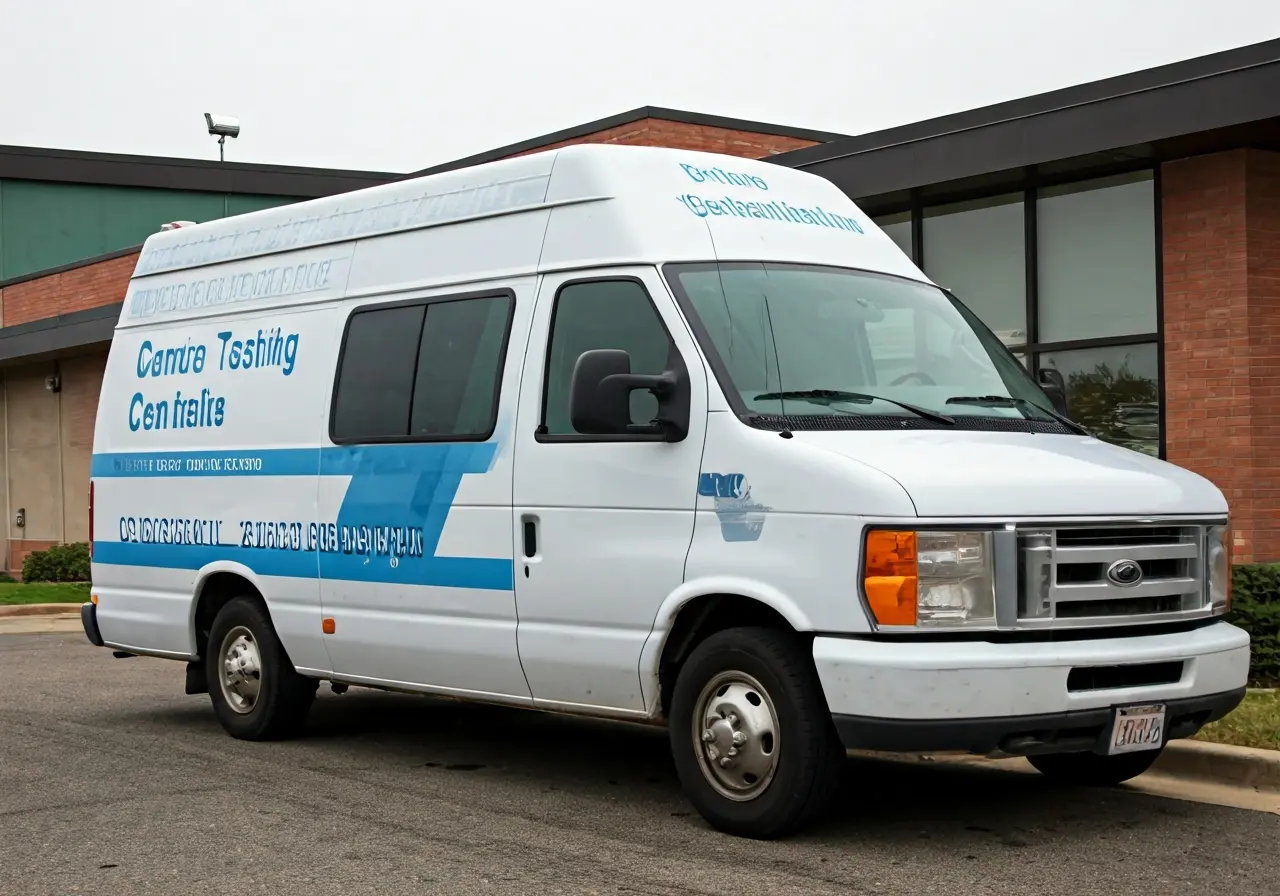
A plant with 200 employees in its hearing conservation program faces the same annual audiometric testing deadline every year under 29 CFR 1910.95(g), and every year someone has to figure out how to get that many people tested without shutting down a shift. Sending employees offsite to a clinic one or two at a time stretches a single testing cycle across weeks and chips away at production time. Mobile hearing testing solves the logistics problem by bringing a calibrated audiometric booth to the facility instead, which is why it has become the default approach for multi-site employers rather than a convenience add-on.
What does OSHA actually require for annual hearing tests?
Under 1910.95(g), every employee enrolled in a hearing conservation program because their noise exposure meets or exceeds the 85 dBA action level must receive a baseline audiogram within six months of first exposure, followed by an annual audiogram for as long as they remain in the program. Each annual test gets compared against the employee's baseline to check for a standard threshold shift, defined as an average 10 dB or greater shift at 2000, 3000, and 4000 Hz in either ear. The testing itself has to be performed by a licensed audiologist, otolaryngologist, physician, or a trained technician working under one of those professionals, in a booth or room that meets the background noise limits in Appendix D. None of that changes based on where the test happens, which is the detail that makes mobile testing possible in the first place: a properly equipped mobile unit can meet the same background noise and equipment calibration standards as a fixed clinic booth.
Why does testing location matter for compliance, not just convenience?
A missed annual test is a compliance gap, not a scheduling inconvenience, and the gap grows every day an employee goes untested past their due date. Employers that rely on employees to self-schedule a clinic visit around their own transportation and availability see completion rates drop, especially at facilities with rotating shifts or a workforce spread across multiple buildings. Mobile testing removes the self-scheduling failure point by setting a fixed on-site date and testing employees in blocks during their shift, which is why facilities that switch from offsite clinic referrals to on-site mobile testing typically see their annual testing completion rate climb toward 100 percent in the same cycle. The compliance benefit is not that mobile testing is more thorough, it is that it closes the gap between "the test exists" and "the test actually gets done on time."
Mobile testing vs clinic referral: compliance comparison
| Factor | Mobile on-site testing | Offsite clinic referral |
|---|---|---|
| Typical completion rate within the testing window | High, employer controls the schedule | Lower, depends on employee follow-through |
| Production time lost per employee | Minutes, tested in shift blocks | Often a full trip off-site |
| Equipment and background noise standard | Same ANSI S3.1 booth requirement, met in a mobile booth | Same standard, met in a fixed clinic room |
| Multi-site scheduling | One provider visits each site on a set route | Each site refers independently, inconsistent timing |
How does mobile testing work across multiple facilities?
For an employer running several plants, the scheduling problem compounds: each site has its own anniversary date for prior-year testing, its own shift pattern, and its own point of contact. A mobile provider batches nearby sites into the same trip and builds a rolling schedule off each facility's prior-year test date rather than treating every location as a one-off booking. That keeps every site inside its testing window without the corporate safety office having to track a dozen separate clinic referral chains, and it gives one consistent technician and one consistent equipment calibration record across the whole account instead of a different clinic's documentation style at every site.
How Foster handles mobile hearing testing for OSHA compliance
Our mobile testing program is built around the same annual deadline every hearing conservation program runs against: we schedule the next visit relative to each site's prior-year test date, not a generic calendar slot, so a facility never drifts past its 1910.95(g) window. The booth itself is calibrated and background-noise verified before testing starts, the technician administering tests is trained to the same standard as a clinic-based tester, and results get matched to each employee's baseline on the spot so a standard threshold shift gets flagged immediately rather than discovered weeks later in a report. For multi-site clients we route visits geographically so plants in the same region get tested on the same trip, which keeps the whole account on one calibration and documentation standard instead of a patchwork of local clinics.
Frequently asked questions
Does a mobile audiogram meet the same OSHA standard as a clinic test?
Yes. OSHA 1910.95 does not set a different standard based on testing location. A mobile testing booth has to meet the same background noise limits in Appendix D and use audiometers calibrated to the same tolerances as a fixed clinic room.
How often does OSHA require audiometric testing?
Annually for every employee enrolled in a hearing conservation program, after an initial baseline audiogram taken within six months of first noise exposure at or above the 85 dBA action level.
Who is qualified to administer the test?
A licensed audiologist, otolaryngologist, or physician, or a trained technician working under the supervision of one of those professionals, as required under 1910.95(g)(3).
Can mobile testing cover a multi-site employer on one schedule?
Yes. A mobile provider can batch nearby facilities into one route and track each site's testing window off its own prior-year date, which keeps every location compliant without separate clinic referral chains.
What happens if an annual test reveals a standard threshold shift?
The employee's annual result is compared against their baseline, and a shift of 10 dB or more averaged across 2000, 3000, and 4000 Hz in either ear triggers the follow-up procedures required under 1910.95(g), including notification and possible retesting or referral.
Foster Special Instruments runs on-site mobile hearing testing for single and multi-site employers, backed by OSHA-compliant hearing conservation program support. Related reading: preparing a facility for mobile hearing test day. Ready to schedule a site? Request a quote.
Sources
- 29 CFR 1910.95: Occupational noise exposure (OSHA.gov)
Foster runs the entire 1910.95 program on-site — audiograms, STS handling, audiologist review, notifications, and records. Headcount, shifts, and ZIP gets you a price in two minutes.
Get an instant program priceRelated guides
What Does an OSHA Hearing Conservation Citation Actually Cost?
Current OSHA penalty amounts for hearing conservation violations under 1910.95, how severity and repeat status change the number, and what drives the gap between a small and a six-figure citation.
5 min read Read →Hearing ConservationHow Soon Do Mobile Hearing Test Results Come Back and Get Reviewed?
The real timeline for mobile hearing test results: technician comparison, professional review, and OSHA's 21-day STS notification and 7-day 1904.10 recording deadlines.
6 min read Read →Hearing ConservationWho Can Legally Perform an OSHA Audiometric Test?
29 CFR 1910.95(g)(3) allows two paths for a technician to administer workplace hearing tests: CAOHC certification or demonstrated competence. Here's the difference and when each applies.
5 min read Read →