What Is Employee Hearing Testing and Why Is It Important?
January 22, 2026 · 5 min read
By Jeff Schroeder, Foster Special Instruments
What is employee hearing testing?
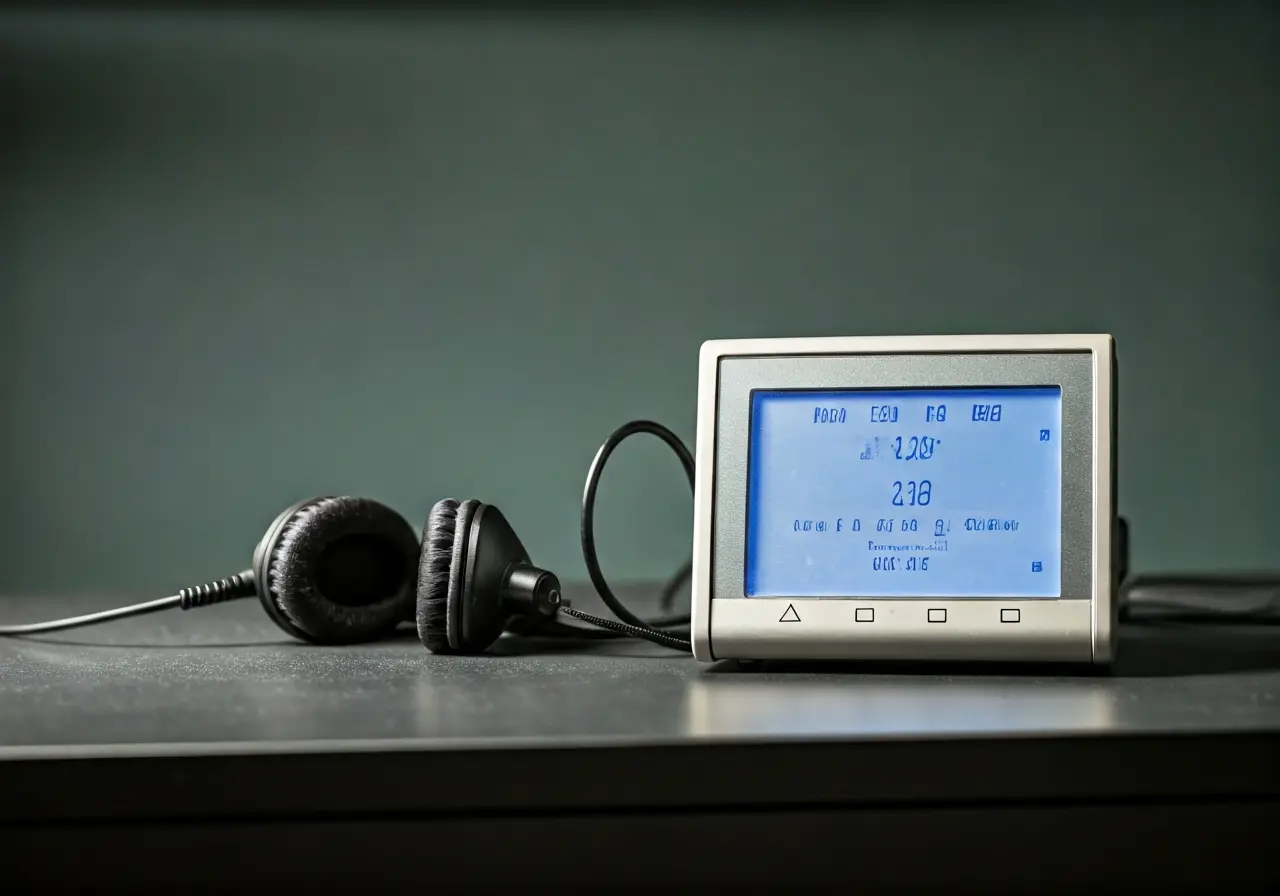
Employee hearing testing, formally called audiometric testing, measures the quietest sound a worker can hear at a series of frequencies, usually 500 Hz through 6000 Hz, using an audiometer and headphones in a quiet or sound-attenuating environment. The result is an audiogram, a chart of hearing threshold by frequency for each ear, compared against the employee's baseline audiogram taken when they entered the hearing conservation program. A baseline has to be established within six months of first high-noise exposure, and annual tests after that are compared back to the baseline to catch a standard threshold shift, an average 10 dB or greater worsening at 2000, 3000, and 4000 Hz in either ear1. The test itself takes a few minutes per employee; the value is in the comparison over years, not any single test in isolation.
Which employees does OSHA require to be tested?
Any employee whose 8-hour time-weighted average noise exposure reaches 85 decibels, the action level under 29 CFR 1910.95, must be enrolled in a hearing conservation program that includes noise monitoring, audiometric testing, hearing protection at no cost, annual training, and recordkeeping1. That 85 dBA threshold is separate from the 90 dBA permissible exposure limit: employees between 85 and 90 dBA must be tested and offered hearing protection, but protector use isn't mandatory for them the way it is above 90 dBA. Employers sometimes assume the rule only applies to obviously loud environments like stamping presses or sawmills, but any facility where TWA readings clear 85 dBA, packaging lines, generator rooms, some kitchen equipment, triggers the same obligations regardless of industry.
| Exposure level (8-hr TWA) | Program enrollment required | Hearing protection required |
|---|---|---|
| Below 85 dBA | No | No |
| 85 to 89.9 dBA (action level) | Yes | Offered, not mandatory |
| 90 dBA and above (PEL) | Yes | Mandatory |
Why does annual testing matter more than a one-time hearing check?
Noise-induced hearing loss develops gradually and painlessly, which is exactly why a single test doesn't do the job a comparison over time does. An employee can pass a hearing test in year one and still be losing measurable threshold each year after, and without an annual test compared against their own baseline, that decline goes undetected until it's substantial and permanent. The standard threshold shift calculation exists specifically to catch that early trajectory, an average 10 dB worsening at the three key frequencies, so an employer can intervene with refitting, retraining, or a referral before the loss becomes disabling. Testing that stops after the baseline, or that gets treated as a one-time compliance checkbox, misses the entire point of the program: catching change, not confirming a starting point.
What does an employer actually gain from running the program well?
A defensible hearing conservation program reduces the two costs that hit employers hardest when noise exposure goes unmanaged: workers' compensation claims for occupational hearing loss, which can be filed years after exposure and are expensive to contest without documented baseline and annual data, and OSHA citations for missing or incomplete recordkeeping during an inspection. Beyond the compliance case, employers running the program consistently catch STS cases early enough to intervene with hearing protector refitting or work reassignment, which keeps employees able to communicate safely around equipment, forklifts, and verbal warnings, a real workplace safety benefit distinct from the paperwork. The program's value shows up as fewer disputed claims and fewer citations, not as a number that's visible day to day, which is part of why it's easy for employers to underinvest in it until an inspection or a claim forces the issue.
How Foster runs mobile audiometric testing for employers
Our mobile testing units bring a sound-attenuating booth, a calibrated audiometer, and a CAOHC-certified technician on-site, so employees don't lose a shift traveling to a clinic. Every test result is compared against the employee's baseline on the spot, standard threshold shifts get flagged to our reviewing audiologist the same day, and the employer receives organized records instead of a stack of individual printouts. For companies running testing at multiple sites or tracking enrollment across shifts, we've found the biggest failure point isn't the testing itself, it's keeping baseline dates, retest deadlines, and STS follow-ups straight across dozens or hundreds of employees over years, which is the specific gap Foster's Compliance Workspace was built to close.
Frequently asked questions
How long does an audiometric test take per employee?
A standard pure-tone audiogram takes roughly 5 to 10 minutes per employee, including setup, though a mobile testing day for a full shift is scheduled around throughput for the whole group, not just one test.
Does OSHA require hearing tests for office employees?
Only if their 8-hour TWA noise exposure reaches 85 dBA. Most office environments fall well below that threshold and don't trigger enrollment, though occasional high-noise tasks (a print shop area, a mechanical room) can bring specific employees into scope.
What happens if an employee's test shows a standard threshold shift?
The employer must notify the employee in writing within 21 days, and depending on the shift and prior protection use, may need to refit hearing protectors, provide additional training, or refer the employee for further evaluation1.
Can an employee refuse the annual hearing test?
OSHA's standard doesn't include an employee opt-out for employees enrolled in the program; testing is a required program element, and refusal should be handled through the employer's own workplace policy, not treated as compliant with 1910.95.
Is a hearing test the same as a hearing protection fit check?
No. An audiometric test measures hearing threshold; a fit check verifies a hearing protector is sealing and attenuating noise correctly. Both are part of a complete program, but they answer different questions.
Learn more about scheduling a mobile testing day on our hearing testing services page, or see how we keep instruments audit-ready on the audiometer calibration page. Request a quote for your facility. Related reading: who can see an employee's audiogram results.
Sources
Foster runs the entire 1910.95 program on-site — audiograms, STS handling, audiologist review, notifications, and records. Headcount, shifts, and ZIP gets you a price in two minutes.
Get an instant program priceRelated guides
What Does an OSHA Hearing Conservation Citation Actually Cost?
Current OSHA penalty amounts for hearing conservation violations under 1910.95, how severity and repeat status change the number, and what drives the gap between a small and a six-figure citation.
5 min read Read →Hearing ConservationHow Soon Do Mobile Hearing Test Results Come Back and Get Reviewed?
The real timeline for mobile hearing test results: technician comparison, professional review, and OSHA's 21-day STS notification and 7-day 1904.10 recording deadlines.
6 min read Read →Hearing ConservationWho Can Legally Perform an OSHA Audiometric Test?
29 CFR 1910.95(g)(3) allows two paths for a technician to administer workplace hearing tests: CAOHC certification or demonstrated competence. Here's the difference and when each applies.
5 min read Read →