Mobile Hearing Testing for Employers: A Compliance Guide
January 15, 2026 · 5 min read
By Jeff Schroeder, Foster Special Instruments
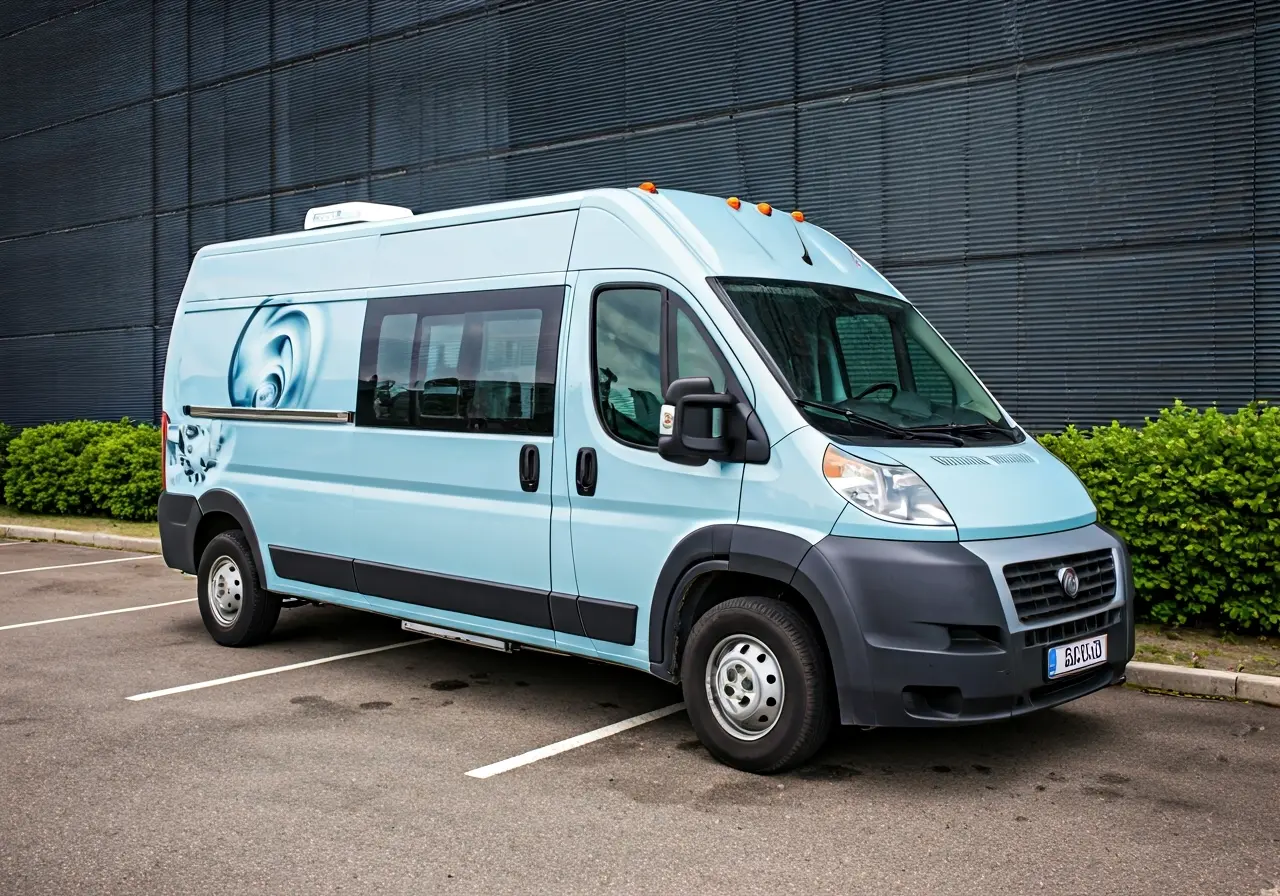
What is mobile hearing testing and how does it work?
Mobile hearing testing brings audiometric booths and a technician to the employer's site instead of sending employees to an off-site clinic. A mobile unit typically includes a sound-attenuating booth, a calibrated audiometer, and a technician who administers a hearing test at each frequency the standard requires, usually in about 10 to 15 minutes per employee. The test measures hearing thresholds and compares them to the employee's baseline audiogram to check for a standard threshold shift. For employers with noise-exposed workers across multiple shifts, this format lets the whole workforce get tested over one or two visit days instead of losing production time to off-site appointments, provided the visit is scheduled with enough slots for every shift.
Who is required to administer the test, and does OSHA require any particular vendor?
Audiometric tests must be performed by a licensed or certified audiologist, otolaryngologist, or physician, or by a technician who is certified by the Council for Accreditation in Occupational Hearing Conservation (CAOHC) or who has otherwise demonstrated competence in administering the test, and any technician must be responsible to an audiologist, otolaryngologist, or physician1. A technician who only operates a microprocessor audiometer without interpreting results does not need to hold that certification, but someone qualified must still review results that show a shift. OSHA does not require a specific vendor or brand of mobile provider. What matters is that whoever administers the test on your site can produce evidence of that qualification, and that a qualified reviewer signs off on any audiogram showing a shift from baseline.
Why does the baseline audiogram deadline change for mobile van testing?
Under 29 CFR 1910.95(g)(5), an employer must establish a valid baseline audiogram within 6 months of an employee's first exposure at or above the 85 dBA action level. Where mobile test vans are used to meet that obligation, the deadline extends to within 1 year of first exposure, and any employee tested more than 6 months after first exposure has to wear hearing protectors for the period beyond that 6-month mark until the baseline is obtained1. This extension exists because mobile scheduling can't always reach every new hire within 6 months, but it isn't an exemption from protection during the gap. An employer relying on the mobile-van extension still needs a documented hearing protector issuance record covering that interval, not just a note that the extension applies.
| Requirement | Standard testing | Mobile van exception |
|---|---|---|
| Baseline audiogram deadline | Within 6 months of first exposure at or above 85 dBA | Within 1 year of first exposure at or above 85 dBA |
| Hearing protection during the gap | Not applicable if baseline is timely | Required from month 6 to whenever baseline is obtained |
| Pre-test quiet period | At least 14 hours without workplace noise exposure | Same 14-hour requirement; hearing protectors may substitute |
What does the test itself have to measure, and what equipment is behind it?
Audiograms obtained under the hearing conservation standard must meet the requirements of 1910.95 Appendix C, Audiometric Measuring Instruments, which sets the accuracy and calibration standards the audiometer itself must meet2. A mobile provider's booth also has to keep background noise low enough that it doesn't mask the frequencies being tested, which is why the booth's acoustic performance and the audiometer's calibration record both matter as much as the technician's certification. An employer evaluating a mobile provider should ask to see the audiometer's current calibration certificate and the booth's ambient noise compliance documentation, not just take "OSHA compliant" as a description without backup.
What should an employer verify before booking a mobile testing provider?
Ask for the technician's CAOHC certification or equivalent competence documentation, the audiometer's current calibration certificate, and how the provider handles records if the vendor relationship ends. Records must be made available to employees, former employees, their designated representatives, and OSHA within 15 working days of a request, and paper records held only by a departing vendor routinely fail that turnaround1. A provider who stores results in a system the employer can access directly, rather than only through the vendor, avoids that failure point. It's also worth confirming the provider's scheduling can actually reach every shift on the visit day, since a shift missed on testing day becomes a baseline-deadline problem six months later.
How Foster runs mobile hearing testing day for employers
Foster's CAOHC-certified technicians bring calibrated audiometers and sound-attenuating booths on-site, and results are logged to a system the employer can pull directly rather than relying on Foster to hold the only copy. Employers scheduling their first mobile visit can review the shift-by-shift capacity question in Foster's related post on how many employees a mobile unit can test in a day, and multi-shift scheduling logistics are covered in Foster's hearing testing service overview. Foster also runs the audiometer calibration program that keeps the equipment used on test day within the Appendix C tolerances the standard requires, and a quote for a mobile testing day includes a review of technician certification and equipment calibration status before the visit is scheduled.
Frequently Asked Questions
Does a mobile testing van need to be CAOHC accredited?
OSHA doesn't require the van itself to hold accreditation. What OSHA requires is that the technician administering the test is CAOHC-certified or has demonstrated competence, and that a qualified professional reviews any audiogram showing a shift.
Can an employer use the 1-year mobile van baseline deadline for every employee?
The extension applies specifically to using mobile vans to meet the testing obligation. Employees tested past the 6-month mark under that extension must be issued and documented as wearing hearing protectors for the gap period.
What happens to test records if we switch mobile testing providers?
Records must remain available to employees, former employees, and OSHA within 15 working days of a request. An employer should confirm in writing how a departing vendor transfers or continues providing access to historical results.
How long does mobile hearing testing take per employee?
A single audiometric test typically takes 10 to 15 minutes, though total visit length depends on how many employees are being tested and how many booths the provider brings on-site.
Sources
Foster runs the entire 1910.95 program on-site — audiograms, STS handling, audiologist review, notifications, and records. Headcount, shifts, and ZIP gets you a price in two minutes.
Get an instant program priceRelated guides
What Does an OSHA Hearing Conservation Citation Actually Cost?
Current OSHA penalty amounts for hearing conservation violations under 1910.95, how severity and repeat status change the number, and what drives the gap between a small and a six-figure citation.
5 min read Read →Hearing ConservationHow Soon Do Mobile Hearing Test Results Come Back and Get Reviewed?
The real timeline for mobile hearing test results: technician comparison, professional review, and OSHA's 21-day STS notification and 7-day 1904.10 recording deadlines.
6 min read Read →Hearing ConservationWho Can Legally Perform an OSHA Audiometric Test?
29 CFR 1910.95(g)(3) allows two paths for a technician to administer workplace hearing tests: CAOHC certification or demonstrated competence. Here's the difference and when each applies.
5 min read Read →