How Calibration Services Keep Workplace Equipment Reliable
November 16, 2025 · 5 min read
By Jeff Schroeder, Foster Special Instruments
What does an instrument calibration service actually do?
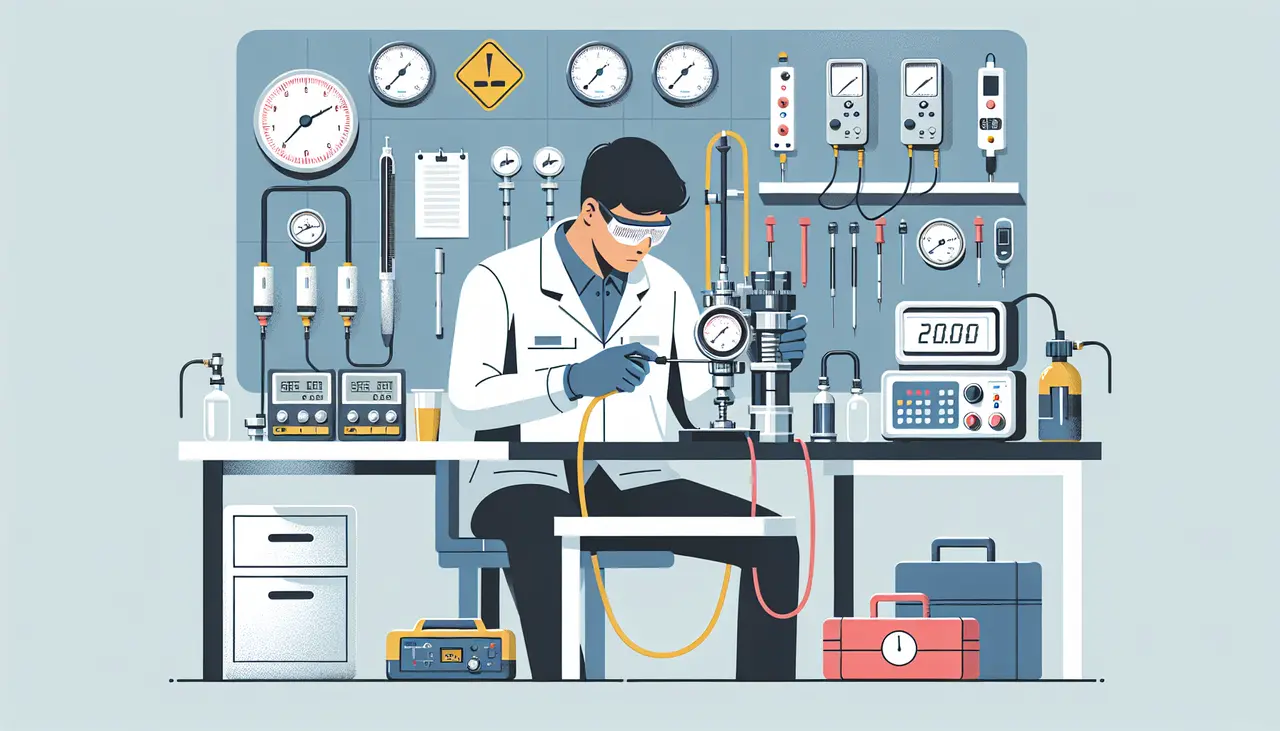
A calibration service compares an instrument's readings against a known, traceable reference standard, then documents any deviation and adjusts the instrument back within its specified tolerance. For an audiometer, that means testing every frequency and level against a calibrated reference before it's used on the next employee. For a breath alcohol device, it means confirming the reading against a certified gas or wet-bath standard at a known concentration. The output isn't just an adjusted dial — it's a certificate documenting what was measured, what tolerance it fell within, and what standard it was checked against, which is the paper trail that matters when a result is challenged later.
Why does calibration matter for OSHA compliance, not just accuracy?
Several OSHA standards that govern occupational health testing implicitly or explicitly require calibrated equipment — sound level meters and audiometers under 29 CFR 1910.95, for example, need periodic calibration checks documented as part of a defensible hearing conservation program. An audiogram taken on an out-of-tolerance instrument isn't just inaccurate, it's a record an OSHA inspector or a plaintiff's attorney can challenge outright, because the underlying measurement has no verified basis. Calibration isn't a maintenance nicety layered on top of compliance — for regulated testing equipment, it's part of what makes the resulting record usable at all.
What's the difference between a calibration and a calibration check?
A calibration check (sometimes called a functional check) confirms an instrument is reading correctly against a known reference and takes minutes — it's the routine test technicians run daily or before each use. A full calibration is a more involved process that includes adjustment, not just verification, and typically happens on a scheduled interval through a lab or service provider with traceable reference standards. Both matter: the daily check catches an instrument that's drifted out of tolerance between service visits, while the scheduled calibration is what corrects it and generates the certificate.
| Aspect | Calibration check | Full calibration |
|---|---|---|
| Frequency | Daily or before each use | Per manufacturer/OSHA interval, typically annual |
| Who performs it | Operator/technician on-site | Calibration lab or certified service provider |
| Adjusts the instrument | No — verification only | Yes, corrects drift within tolerance |
| Produces a certificate | No | Yes, traceable documentation |
What should a calibration certificate actually contain?
A defensible certificate lists the instrument's serial number, the date of calibration, the reference standard used and its own traceability (typically to NIST), the as-found and as-left readings at each test point, and the technician or lab's identification. A certificate missing as-found readings can't show whether the instrument was drifting before adjustment, which matters if a prior test result is later questioned. If your calibration provider hands back only a sticker and a one-line "passed" statement with no supporting data, you don't have documentation that will hold up to scrutiny — you have a claim.
How does calibration reduce workplace risk beyond regulatory paperwork?
Uncalibrated instruments fail quietly. A pressure gauge reading low doesn't announce itself; it just lets a system run closer to its actual limit than the operator believes. A sound level meter reading low under-reports noise exposure, which can mean workers who need hearing protection don't get flagged for it. The failure mode isn't a dramatic breakdown — it's a slow accumulation of decisions made on bad data. Regular calibration catches the drift before it compounds into either a safety incident or a compliance gap that surfaces during an audit.
How Foster handles calibration for occupational health equipment
Foster calibrates audiometers, sound level meters, dosimeters, spirometers, and breath alcohol devices against NIST-traceable standards, and every certificate we issue includes as-found and as-left data, not just a pass/fail stamp. We track each customer's fleet on a recurring schedule so instruments don't slip past their interval unnoticed, and we flag equipment that's drifting consistently at each visit, since repeated near-tolerance readings usually mean a unit is approaching end of service life rather than a one-off fluke. Employers running an in-house occupational health program lean on our calibration services specifically because a certificate from a provider who understands the OSHA context behind the number holds up better than one from a generic instrument shop. Pairing calibrated instruments with properly trained staff through our BAT training program closes the loop on both sides of a defensible testing program.
FAQ
How often does workplace testing equipment need calibration?
It depends on the instrument and applicable standard — audiometers typically need an annual exhaustive calibration under ANSI S3.6 with more frequent functional checks in between, while breath alcohol devices often require calibration checks at shorter intervals set by the manufacturer or DOT guidance. Check the specific standard for each instrument type rather than assuming a single interval covers everything in your fleet.
Can we calibrate instruments in-house instead of using a service?
Some instruments allow operator-level calibration checks in-house, but full calibration against traceable standards generally requires reference equipment and expertise most employers don't maintain internally — see our post on audiometer calibration intervals for how this plays out for one common instrument.
What happens if an instrument fails calibration?
The provider documents the as-found reading, attempts adjustment back within tolerance, and if the instrument can't be brought into spec, flags it for repair or replacement rather than issuing a passing certificate. Using an instrument that failed calibration invalidates any test results generated with it going forward.
Does a calibration certificate expire?
The certificate itself doesn't expire, but it only certifies the instrument's condition on the date tested. The practical "expiration" is whatever interval your governing standard or manufacturer requires before the next calibration is due.
Ready to get your equipment on a calibration schedule? Request a quote or reach out through our on-site testing page to fold calibration into your existing service visits.
On-site across OH, KY, IN, IL & MI; mail-in nationwide. Traceable certificate with every unit and free loaners during extensive repairs.
Schedule calibrationRelated guides
How to Ship Instruments for Calibration Without Wrecking Them
Audiometers and breath testers arrive at calibration labs with cracked housings and loose components more often than it should happen. Here is how to pack and ship them safely.
6 min read Read →Calibration & InstrumentsSound Level Meter and Dosimeter Calibration Intervals
How often OSHA noise monitoring equipment actually needs calibration: the daily field check, the annual lab calibration, and what each one verifies.
5 min read Read →Calibration & InstrumentsNIST Traceability Explained for Safety Equipment Buyers
What NIST traceable calibration actually means for audiometers and breath alcohol instruments, and how to check whether a vendor's certificate proves it.
6 min read Read →