The Role of Mobile Hearing Testing in Ensuring Workplace Safety
December 30, 2025 · 5 min read
By Jeff Schroeder, Foster Special Instruments
Noise is a hazard employers can measure, and hearing tests are how they find out whether their controls are working. Mobile testing brings a calibrated audiometer and a trained technician to the plant, so a whole shift can be tested without anyone leaving the site.
What is mobile hearing testing?
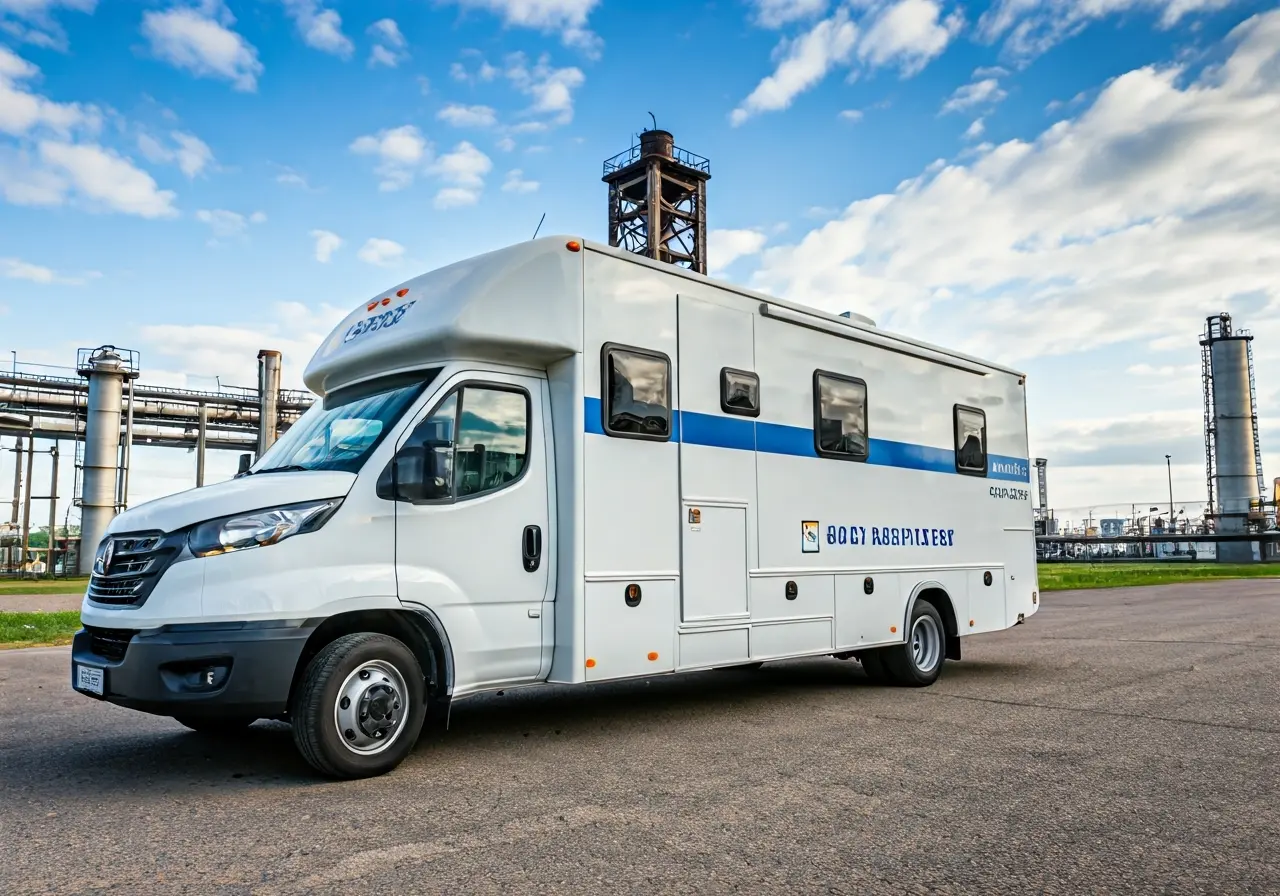
Mobile hearing testing means the audiometric exam is done at the employer's location instead of at a clinic. A technician sets up a calibrated audiometer in a booth or a controlled quiet space, tests each employee in a few minutes, and sends the results for review. Under 29 CFR 1910.95(g), employers must provide audiometric testing to employees exposed at or above an 8-hour time-weighted average of 85 dBA, at no cost to the employee, with a baseline audiogram and annual tests after that. The exam itself is the same whether it happens in a clinic or in a parking lot. What changes is logistics: no travel time, no scheduling employees around outside appointments, and one visit that covers a whole department. The quality of the result still depends on the equipment being current on calibration and the room being quiet enough for the test.
Why does on-site testing matter for safety?
The annual audiogram is the only check that tells you whether hearing protection and noise controls are actually protecting people. A standard threshold shift, compared against the baseline, is the trigger for follow-up under the OSHA rule. When testing is convenient, it gets done on time and for everyone. When it depends on employees driving to a clinic, participation slips and the program has gaps that show up at an inspection. On-site testing also lets the technician see the noise environment, which helps when a result looks off and someone has to decide whether the cause is work exposure or something else.
How does a mobile test day work?
| Step | What happens |
|---|---|
| Before the visit | Employer sends the roster and picks a quiet room or confirms the booth location |
| Setup | Technician checks the audiometer, verifies ambient noise, and prepares test stations |
| Testing | Employees are tested one at a time after the required quiet period away from noise |
| Review | Results go to a qualified reviewer, who flags any shift from baseline |
| Records | Employer receives audiograms for the program file |
Our own process follows this order. Before testing, we confirm the audiometer's calibration date and check the room, because a room that is too loud invalidates the thresholds no matter how good the equipment is. Preparation on the employer side is covered in mobile hearing test day preparation.
What should employers plan for?
Give employees a noise-free period before the test, since recent loud exposure can temporarily lower thresholds and look like a shift. Hearing protection worn during the prior shift can count toward that quiet period, so ask the provider what they require. Plan a room with a door, away from compressors and traffic. For multi-shift plants, schedule the technician across shifts so no one is missed. If a test cannot be done because the space is too noisy, reschedule instead of recording a result you cannot defend. Records should be kept as the standard requires, and the hearing testing program page explains what we provide for the file.
How Foster runs mobile testing
Foster brings calibrated equipment to the client site and tests employees on the schedule the employer sets. We keep our audiometers on a current calibration cycle through our calibration service, and results are reviewed against each employee's baseline before they reach the employer. See on-site testing for coverage, or request a quote with your headcount and number of shifts.
Frequently asked questions
Who must be offered audiometric testing?
Employees exposed at or above an 8-hour TWA of 85 dBA, under 29 CFR 1910.95(g), at no cost to them.
How often is testing required?
A baseline audiogram, then an annual audiogram for each employee in the program.
Does a mobile test count the same as a clinic test?
Yes, provided the audiometer is calibrated and the room meets the ambient noise requirements of the standard.
Can we test all shifts in one visit?
Yes. The technician can be scheduled across shifts, or over consecutive days for a large plant.
Foster runs the entire 1910.95 program on-site — audiograms, STS handling, audiologist review, notifications, and records. Headcount, shifts, and ZIP gets you a price in two minutes.
Get an instant program priceRelated guides
What Does an OSHA Hearing Conservation Citation Actually Cost?
Current OSHA penalty amounts for hearing conservation violations under 1910.95, how severity and repeat status change the number, and what drives the gap between a small and a six-figure citation.
5 min read Read →Hearing ConservationHow Soon Do Mobile Hearing Test Results Come Back and Get Reviewed?
The real timeline for mobile hearing test results: technician comparison, professional review, and OSHA's 21-day STS notification and 7-day 1904.10 recording deadlines.
6 min read Read →Hearing ConservationWho Can Legally Perform an OSHA Audiometric Test?
29 CFR 1910.95(g)(3) allows two paths for a technician to administer workplace hearing tests: CAOHC certification or demonstrated competence. Here's the difference and when each applies.
5 min read Read →